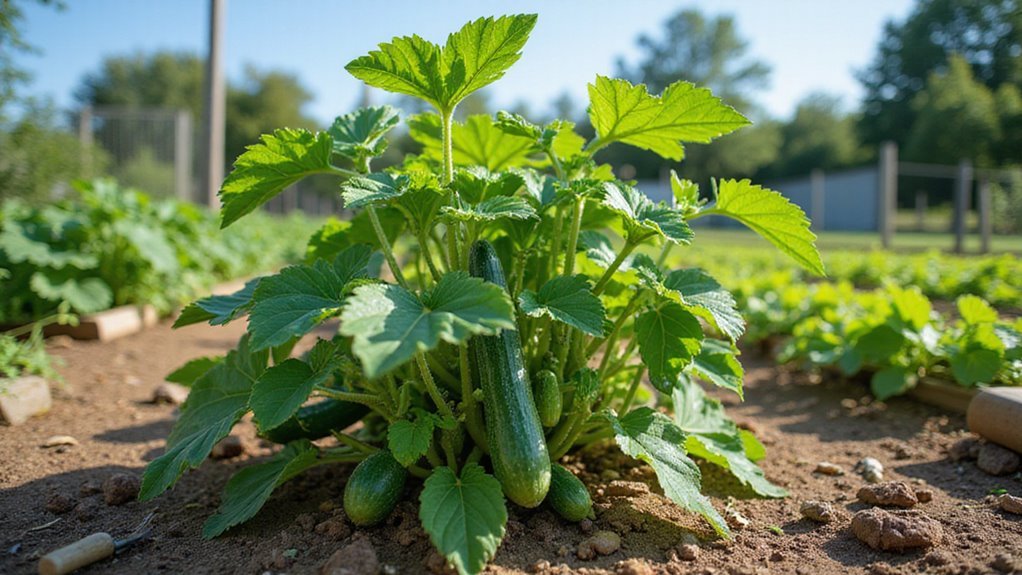
You’ll find that cucumbers thrive with 6-8 hours of direct sunlight daily. This full sun exposure is essential for strong plants and a plentiful harvest. When your cucumber plants don’t get enough light, they produce fewer, smaller fruits due to limited photosynthesis. Morning sunshine works especially well, as it gives plants energy without the stress of afternoon heat. Want to know how to position your cucumber plants for maximum sun and what to do when conditions aren’t perfect?
The Ideal Sunlight Requirements for Cucumber Plants
When it comes to growing healthy cucumbers, sunlight is one of the most important factors for success. Your cucumber plants need 6-8 hours of full, direct sunlight each day to produce the best harvest. Without enough sun, you’ll notice fewer cucumbers and smaller fruits on your plants.
If you’re choosing a spot for your cucumber garden, look for an area that gets plenty of morning sun. Morning sunlight is gentler and helps your plants avoid the stress of intense afternoon heat. To maximize sun exposure, try planting your cucumbers in rows that run north to south. This arrangement guarantees each plant receives consistent light throughout the day as the sun travels across the sky. For optimal results, consider using a professional growing kit which includes everything needed for successful cucumber cultivation. Remember, proper sunlight leads to stronger plants and a more abundant cucumber harvest.
Understanding Full Sun vs. Partial Shade for Cucumbers
Although many gardeners understand that cucumbers need sunlight, it’s important to recognize the difference between full sun and partial shade for these plants. Full sun means at least 6-8 hours of direct, unobstructed sunlight daily, which is ideal for cucumbers to thrive and produce abundantly.
When you plant cucumbers in partial shade, you’ll notice fewer and smaller fruits. This happens because your plants can’t perform enough photosynthesis to generate energy for fruit production. You’ll also observe that partially shaded cucumbers develop larger leaves and weaker stems as they stretch toward available light.
For the best results, position your cucumber plants to receive morning sun, which is gentler and less stressful. Arrange your garden rows from north to south to maximize sunlight exposure throughout the day.
How Temperature Affects Cucumber Growth
Temperature plays an essential role in determining your cucumber plants’ success throughout their growing cycle. For best results, maintain temperatures between 65-80°F, as this range promotes ideal growth and abundant fruit production.
When temperatures climb above 90°F, your plants may develop burned leaves and struggle with dehydration, which can harm overall plant health. At 95°F and higher, you’ll notice stunted growth with fewer, smaller cucumbers developing on the vines.
Since cucumbers have shallow root systems, they require consistent soil moisture, especially during hot weather. Check soil dampness regularly and water when the top inch feels dry. During heat waves, provide temporary shade using row covers or shade cloth to protect your plants from stress, ensuring better yields even during challenging weather conditions.
Recognizing Signs of Too Much Sun Exposure
Despite their love for sunshine, cucumber plants can suffer from excessive sun exposure, especially during peak summer months. You’ll notice wilting leaves first, which often indicates heat stress rather than too much light itself. This means your plants need more water or some afternoon shade.
When temperatures climb above 90°F, watch for leaf burn—brown edges and spots on leaves that result from intense sunlight combined with high heat. Since cucumbers have shallow roots, they quickly lose moisture from their top soil layer during hot, sunny days.
Check for curling or browning leaves, which signal that your plants are struggling with heat stress. Always monitor soil moisture by touching the soil around your plants. Keeping the soil consistently moist will help your cucumbers handle bright sunshine without suffering damage.
Watering Strategies for Sun-Stressed Cucumber Plants
Proper watering becomes your cucumber plants’ lifeline when they’re stressed from too much sun. Water deeply at soil level each morning to help plants prepare for the day’s heat. This timing guarantees moisture reaches their shallow root systems before temperatures rise.
During hot periods, check your plants daily for wilting leaves – a clear sign they need more water. If you notice drooping, increase watering frequency and consider creating temporary shade with garden fabric.
Applying a 2-3 inch layer of mulch around plants helps retain soil moisture and keeps roots cooler. Straw, dried leaves, or compost work well for this purpose. This protective barrier reduces evaporation and stabilizes soil temperature, meaning you won’t need to water quite as frequently even during intense sun exposure.
Creating Shade Solutions During Extreme Heat
When summer temperatures soar above 90°F, your cucumber plants may need temporary shade to prevent scorching and wilting. You can create a simple shade barrier using stakes and cloth positioned to block the harshest afternoon sun while still allowing airflow around your plants.
Trellising offers a dual benefit – it helps cucumbers grow upward while providing natural shade to lower portions of the plant. For container cucumbers, simply move pots to a shadier spot during the hottest part of the day.
Remember to check soil moisture frequently, as hot weather quickly dries out the shallow root zone cucumbers depend on. Once temperatures drop to normal ranges, return your plants to their full-sun location. Cucumbers still need 6-8 hours of direct sunlight daily for ideal growth and production.
Trellising Techniques to Optimize Sunlight Exposure
Trellising your cucumber plants creates a vertical growing environment that maximizes sun exposure while saving valuable garden space. By guiding your cucumbers upward, you’ll guarantee they receive the full 6-8 hours of sunlight they need for ideal growth.
Position your trellis rows in a north-south orientation to provide even light distribution throughout the day. This arrangement prevents plants from shading each other and increases overall light exposure. The vertical structure also improves air circulation around your plants, greatly reducing disease risk.
Beyond sunlight benefits, trellising keeps your cucumbers off the ground, preventing fruit rot and improving drainage. You’ll notice larger, healthier fruits as the plants receive more consistent light without the competition and shading that occurs when vines sprawl on the ground.
North-South Planting: Maximizing Light for Better Yields
Strategic orientation of your cucumber rows from north to south creates a favorable environment for sunlight absorption throughout the growing season. This arrangement guarantees that each cucumber plant receives maximum sun exposure on both sides as the sun travels east to west across the sky.
When you align your rows in this direction, you’ll prevent taller plants from casting shadows on shorter ones. Your cucumber plants will grow more evenly and produce higher yields since they won’t need to compete for light. This method works especially well when combined with trellising techniques.
For best results, space your north-south rows properly to further reduce shading issues. You’ll notice healthier plant development and more consistent cucumber production when each plant gets its fair share of the sun’s energy throughout the day.
Morning Sun vs. Afternoon Sun: What’s Best for Cucumbers?
Why do many experienced gardeners prefer morning sunshine for their cucumber plants? Morning sun provides gentler light that supports healthy growth without the stress of intense heat. When your cucumbers receive sunlight during earlier hours, they can photosynthesize efficiently while maintaining proper hydration levels.
Position your cucumber rows from north to south to maximize morning sun exposure. This orientation helps your plants capture beneficial early light while reducing their contact with the harsher afternoon rays. You’ll notice the difference as your plants show less wilting and leaf burn compared to those exposed to intense afternoon heat.
Morning sun exposure creates an ideal growing environment, allowing your cucumber plants to conserve moisture throughout the day. This strategic placement leads to healthier plants and better fruit production than locations receiving primarily afternoon sunshine.
Balancing Sun and Water for Optimal Cucumber Production
While cucumber plants crave abundant sunshine, they simultaneously demand consistent moisture to thrive, creating a balancing act for gardeners. Your cucumbers need 6-8 hours of full sun daily to produce a good harvest, but their shallow root systems make them vulnerable to drying out.
During hot weather, especially when temperatures exceed 90°F, you’ll need to water more frequently. Check soil moisture daily by inserting your finger about an inch deep—if it feels dry, it’s time to water. Consider providing afternoon shade during extreme heat spells to prevent wilting while still ensuring morning sun exposure.
The key is consistency: monitor both sunlight and moisture levels regularly. A layer of mulch around plants helps retain soil moisture, reducing watering frequency while your cucumbers soak up the sunshine they need.